THE CRIME WEB

AMANDA HOWARD


Bevan Spencer Von Einem


Adelaide – Australia’s Murder Capital?

Adelaide is a far cry from the hustle and bustle of Sydney and Melbourne, most see the City of Churches as more subdued than it’s sister capital cities, yet it has also gained the infamous, though highly dubious title of murder capital of Australia. The state has had several brutal murders that have haunted the public’s imagination such as the Truro serial killings that occurred in the late 1970’s, and the more recent Snowtown murders dubbed the “bodies in the Barrels case. Though the title is probably not warranted, the city of Adelaide has had some of the most brutal killers walk it’s streets.


The Family

One of the least known serial killer cases in Australia’s history is that of five young men and boys who were murdered between June 1979 and June 1983. The case is often referred to as the “Family murders” – a nickname that may be misleading. Such a moniker suggests crimes within a cult or familial setting where people known to the victims had committed murderers. In fact, the name was used by the media to describe something that may have been far more sinister.


‘The Family murders’ nickname was given to the members of a close-yet unnamed group that were ‘related’ through their deep sexual desire to rape and murder teenagers. The murders described here are those known to be linked yet there are many others that may be part of the same series. The man suspect in these crimes – and he only be named as such as he has not been charged with the crimes – told police of ‘The Family’ and their involvement in the murders.


‘The Family’ members were an elite society where boys were passed around between members. The boys, drunk or drugged, were systematically raped and abused. Many victims were lucky enough to escape with their lives – though some were severely injured. Others, including the five mentioned here were not so lucky.


Alan Barnes

Sixteen-year-old Alan Barnes was last seen alive on Sunday June 17, 1979.


The teenager had spent the previous evening drinking with a mate before falling asleep. He woke late the following morning and decided to hitchhike home from Cheltenham to Salisbury. His mate saw him off at Grand Junction Road at midday. Alan waved to his friend before wandering down the road, hoping for a lift.


A witness claimed he saw someone matching Alan’s description getting into a crowded white Holden care at around 1pm. What occurred over the next five days can only be imagined.


The boy endured days of torture, all of it conducted in a haze of drugs. Whether Alan took them voluntarily or fed to him forcibly, we will never know.  Either way, Alan was unable to put up much of a fight during the days he was kept alive.


Waiting twenty-four hours, Judy Barnes, reported Alan missing on Monday. She had expected him home on Sunday. When he didn’t arrive, she assumed he had stayed at his mate’s home. However, when she had not heard from him on Monday, she went to the police. For the next several days, officers did a cursory search – the only result was the witness who had seen Alan enter the white car.


By the following Sunday, June 24, 1979 police knew what had happened to Alan. His broken and tortured body was found near the South Para Bridge. His dead body was devoid of blood and he had sustained horrendous injuries. The impact of being thrown off the bridge had also broken his back. He was found in a pile of twisted body parts.


The boy’s body had been found soon after he had been dumped and the condition of Alan’s body, was unlike anything police had seen before, but would soon see again.


The autopsy on Alan’s body provided a timeline and the cause of death. Alan had been kept alive for at least five days before his murder. He had been struck over the head just prior to his death. However Alan’s anus had been torn apart causing massive blood-loss and the boy’s eventual death. The coroner surmised that a tapered bottle had probably been inserted into the boy’s anus to the point of splitting the opening and internal parts of Alan’s anus. The doctor went further, claiming the bottle may have had a bottle top on it, that cut and sliced away at the boy’s rectum causing further horrendous injuries.


Police were determined to catch the monster that had inflicted the horrific injuries on Alan.  Walking the streets was a psychopath that had enjoyed the torture and mutilation.  Police investigated every lead. One man, called Mr B, claimed that he knew who the boy’s killer was. He said Bevan von Einem had killed the boy. The man told police that von Einem would take boys home, drug them, abuse them  and then let them go the following morning before they woke. The man gave names of many of Von Einem’s associates who had participated in the torture.  However none of those men mentioned gave any information to police.


So, the monster continued on the spree that would last four years.


Neil Muir

Twenty-five year old Neil disappeared on Monday 27th August 1979, however, unlike Alan, he was only missing for one day. His mutilated body was found in a garbage bag at Port River, Adelaide the following day. Like Alan, his body had been dropped from a bridge, however, the killer made a better effort in the disposal of Neil.


The killer cut open Neil’s scrotum and removed the testes. He had then sliced open the penis lengthways and cut off the end. Neil’s spine was severed in two places, and his fingers had also been cut off. . Additionally, the killer had cut of Neil’s head, arms and legs, he then removed the victim’s internal organs and shoved the man’s arms and legs inside of the empty carcass.  The mass of body parts was then put into a plastic garbage bag.


To prevent the head from falling out of the bag, it had been tied to the body. The killer then threw the condensed bag into the river. However, at low tide, the killer’s secret was uncovered.


At Neil’s autopsy, the injuries of Alan Barnes were echoed. Like Alan, Neil had suffered identical injuries to his rectum, again suggesting the insertion of something tapered. The severe tearing had again caused massive blood loss and eventual death. The coroner also noted that the killer had tried to hide the victim’s identity by slicing off his tattoos.


One of the man’s testes was missing, taken as a souvenir. Such a token worried police.  Serial killers remove items from victims to help them relive the event. This worried police for two reasons. One, police knew they were dealing with a serial killer, and secondly, he was enjoying the murders.


Then nothing. Police continued to investigate the two murders, following every lead that crossed their desk to no avail.  Police assumed he had either died, or was in prison for another crime.


Then on Thursday August 27, 1981, exactly two years to the day from Neil’s disappearance and murder, another young man disappeared.


Peter Stogneff

Being a normal fourteen-year-old, it was not unusual for Peter to wag from school. He had done it several times before. However on August 27, 1981 he did not return home.


He left his school bag in the family garage and then headed out to meet a friend at Runde Mall in the centre of Adelaide. Peter’s mate waited several hours, but Peter never arrived.  On his way to the mall, Peter met his killer.


That evening his parents reported him missing, hoping the boy had just runaway, however as days turned into weeks and then months, those hopes faded.


On June 23, 1982, ten months after Peter’s disappearance his skeletal remains were found, dumped on the side of the road at Middle Beach, by a farmer who had been back burning.


When police arrived at the scene they knew what to expect and were no longer surprised by the mutilations. Peter’s killer had cut the body into several pieces, like he had done to Neil Muir. However, any other injuries could not be ascertained as exposure to the elements and the farmer’s clean-up fire had reduced Peter’s body to bones. Therefore any anal injuries could not be determined. Nor could police find Peter’s legs.


While were searching for Peter Stogneff, another boy disappeared.


Mark Langley

Early on the morning of Sunday 28 February, 1982 fourteen-year-old Mark Langley, out with a group of friends, decided to go for a walk War Memorial Drive. He was never seen alive again. His friends searched frantically for Mark before returning to his parents’ house where it was decided to contact police.


On March 8, 1982 a Summertown resident found Mark’s body amongst the bushes on the side of a road. Like the other boys, he had been kept alive for several days and had suffered severe injuries to his rectum. However, Mark had also been ‘operated’ on. He had been sliced open from his midline to his penis. The wound had then been stitched up.


Police were frantic now, the killer was becoming more sadistic and they were no where nearing finding him. They knew it was only a matter of time before another teenager disappeared.


Richard Kelvin

Richard Kelvin was an average fifteen year old boy.  His disappearance on June 6, 1983 made the public take notice. The son of a prominent South Australian journalist, Richard’s disappearance made the national news. The words “serial killer”  were repeated over and over and grave fears were held for Richard’s safety.


In the late afternoon on the day of his disappearance, Richard had walked a friend to a bus stop no more than half a kilometre from his home in North Adelaide. He said goodbye and headed home, but he never made it home for dinner that evening.


One witness later claimed to have heard someone call out for help and several car doors shut followed by the sound of a car speeding away.


It is likely that the sounds heard were the actual abduction of Richard.


For seven weeks, Richard Kelvin’s family kept a vigil until the bad news came. Richard’s mutilated body was found near a light plane runway in the Adelaide Hills. The dumpsite was only five kilometres from where Alan Barnes’ body was found.


Unlike the other boys, Richard’s body wasn’t dumped but carefully placed in the foetal position, his legs bent towards his chest,  his head forward with his arms wrapped around his legs.


When his body was undressed at autopsy the same horrendous anal injuries were found.  His body was also covered in bruises from where he had been bashed repeatedly for the five weeks that the killer had kept him alive.  His body also contained several drugs including Mandrax.


The case was now in full-throttle. With the country’s press parked on the police doorstep, they demanded that the killer be found.


The Suspect

The police had only one route of investigation. The drugs that were found in Richard Kelvin’s body were linked to prescription filled out for Bevan Spencer von Einem. Police had questioned the man before regarding the other murders as well as a number of assaults on young men and boys. On July 28, 1982 he was arrested on the suspicion of murder. The man denied any knowledge of the boy’s murder. Claiming to be sick in bed the night the boy disappeared.


Nonetheless, samples of von Einem’s hair and fibres from his home were collected to compare to those found with Richard’s body.  There was a match between those found on Richard’s clothes and a rug in von Einem’s home.


Faced with irrefutable evidence, von Einem changed his story, claiming to be a good Samaritan who had given the boy a lift on the evening he disappeared.


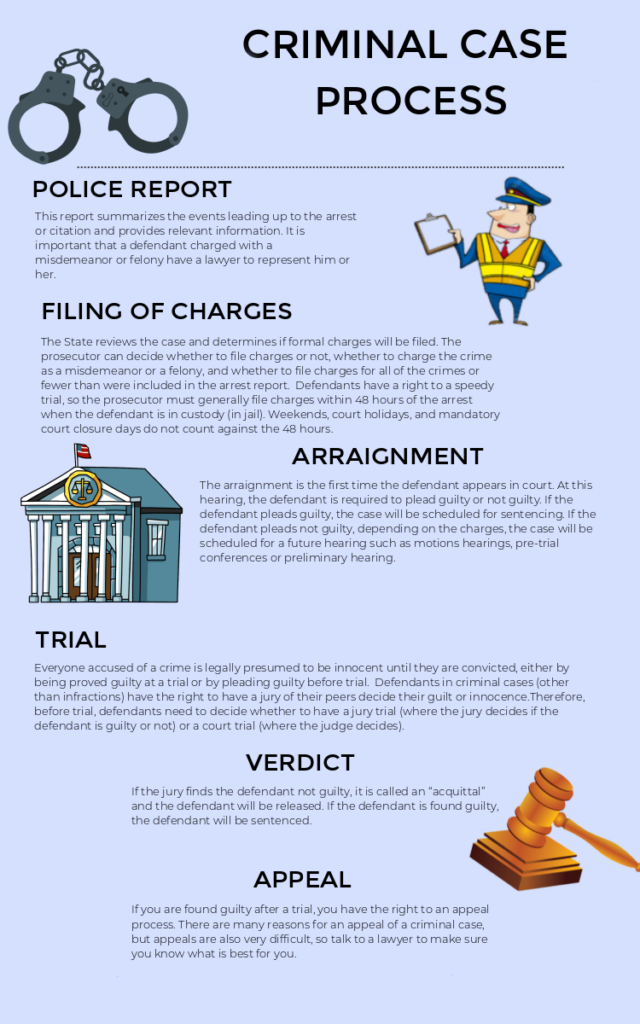
At trial, the man’s story did not convince the jury who took only seven and a half hours on November 5, 1984 to find the man guilty of the brutal and sadistic murder of fifteen-year old Richard Kelvin. He was sentenced to life imprisonment with a non-parole period of thirty-six years.


The Other Boys

So what of the other boys? Von Einem remains the prime suspect in the murders of the other four victims. He was official arrested while in prison for the murders of Mark Langley and Alan Barnes, but was never brought to trial after much of the evidence was deemed inadmissible.


A reward still remains for any assistance in bringing the killer of the four boys to justice.


Von Einem Today

While police still keep the pressure on the killer, he remains in prison where it has been reported he has been charged with the rape of several inmates.